
As Iran moves through a period of reconstruction and market adjustment in 2026, international suppliers, manufacturers, and exporters are paying closer attention to one essential question: which products will face the strongest import demand in Iran? Current market signals point to several high-priority sectors, especially where infrastructure pressure, supply chain disruption, and reduced domestic production have created urgent gaps. On MyIndustry’s recent market analysis page, these needs are clearly linked to construction materials, energy equipment, industrial machinery, healthcare products, and essential consumer goods.
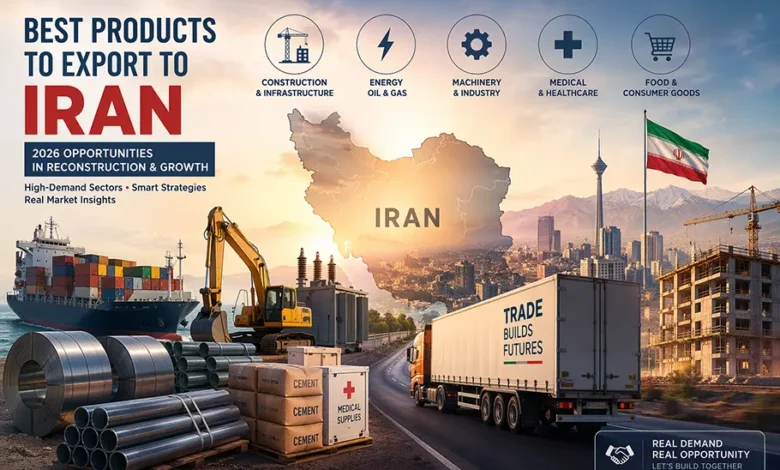
For many businesses, Iran is no longer just a large regional market. It is becoming a targeted opportunity market, where demand is driven by necessity rather than trend alone. When a market enters a reconstruction phase, buyers usually focus first on products that restore operations, support public services, and solve immediate shortages. That is why materials such as steel products, pipes, cement-related inputs, generators, transformers, spare parts, hospital supplies, and packaged essentials become strategically important. The MyIndustry report frames these categories as some of the most relevant import opportunities for 2026.
One of the biggest reasons global exporters should pay attention is that timing matters. In markets under structural pressure, the companies that understand demand early often gain an advantage in pricing, partnerships, and distribution. Iran’s import demand is not only about volume; it is also about relevance. Products that can help repair infrastructure, stabilize supply chains, support healthcare systems, and restart industrial activity are likely to attract the strongest commercial interest. The source article specifically highlights construction and infrastructure equipment, oil and gas and energy equipment, automotive parts and industrial machinery, medical supplies, and food and FMCG as leading demand segments.
Another major issue is market entry strategy. Selling into Iran is rarely just about having a product. It is about knowing the right local channels, understanding importer behavior, preparing for payment limitations, and working within the country’s regulatory environment. The destination article also points to local distribution, partnerships with Iranian importers, alternative payment methods, and the role of platforms such as Torob and Emalls in helping products reach buyers faster. For serious exporters, this means success depends on both product selection and route-to-market planning.
In practical terms, the best opportunities are often found where three conditions come together: high urgency, weak domestic supply, and clear buyer demand. Exporters who can identify these conditions early can build stronger positions before competition intensifies. Iran’s 2026 market is especially important for suppliers of industrial goods, medical equipment, energy-related systems, essential inputs, and recovery-driven products. Businesses that move with research rather than guesswork will be far better prepared to choose the right category, price intelligently, and build long-term commercial relationships. This interpretation is strongly supported by MyIndustry’s analysis of current demand gaps and sector priorities.


No comments:
Post a Comment